
Between Washington and Dhaka: How India Must Redefine Its Role
The New Fault Line in South Asia
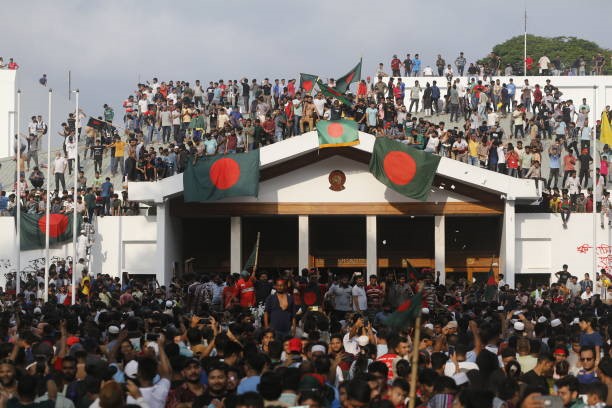
Bangladesh, long viewed as India’s natural partner in South Asia, is emerging as a new theater in the contest between global powers. The recent moves by the United States to expand its military footprint in Dhaka, through joint exercises, defense cooperation agreements, and growing security dialogues have raised concerns in New Delhi. For Washington, Bangladesh is not just about counterterrorism or disaster response, it is a strategic pivot to monitor the Bay of Bengal, secure maritime routes, and counterbalance China’s influence in the Indo-Pacific.
U.S. Intentions and Bangladesh’s Calculus
Recent reports suggest that Washington has intensified defense dialogues with Dhaka, including the proposed General Security of Military Information Agreement (GSOMIA) and Acquisition and Cross-Servicing Agreement (ACSA). These frameworks, if finalized, would open pathways for deeper interoperability, intelligence sharing, and even possible U.S. military presence in Bangladeshi ports or bases. Dhaka, under Prime Minister Sheikh Hasina, has maintained cautious engagement. While wary of antagonising China, its largest investor in infrastructure, Bangladesh also seeks to avoid overdependence on India. Thus, leaning on U.S. security guarantees offers Dhaka a hedge in an increasingly multipolar world.
Strategic Implications for India
For India, U.S. activity in Bangladesh presents a dual challenge. On the one hand, deeper American engagement could stabilise the Bay of Bengal against Chinese assertiveness, indirectly aligning with New Delhi’s Indo-Pacific objectives. On the other, it risks eroding India’s historical primacy in Dhaka and undermining the unique bilateral relationship that has been carefully cultivated since 1971. The possibility of U.S. troops or facilities near India’s vulnerable eastern flank, including the Siliguri Corridor, creates long-term security anxieties. Moreover, such a presence could embolden Dhaka to adopt tougher positions in bilateral disputes, from Teesta water sharing to border management.
The China Factor
India’s concerns must be contextualised in the broader U.S.-China rivalry. Beijing has already invested billions in Bangladesh’s Belt and Road Initiative (BRI) projects, including the Padma Bridge, Payra Port, and power plants. If Washington counters with its own defense agreements, Dhaka may find itself a contested battleground of great-power rivalry. For India, this risks strategic encirclement, Chinese presence in Hambantota (Sri Lanka), Gwadar (Pakistan), Kyaukpyu (Myanmar), and now a potential U.S. foothold in Bangladesh would shrink India’s strategic breathing space.
Lessons from Global Diplomacy Shifts
The Ukraine war and the Israel-Iran conflict demonstrate how smaller states often become proxies in larger contests. Bangladesh’s tilt toward U.S. defense cooperation mirrors this global pattern. India must recognise that traditional diplomacy, relying on cultural and historical ties, may no longer be sufficient. Instead, economic incentives, defense partnerships, and technology sharing will be the new currency of influence.
How India Should Respond
India must begin by deepening its bilateral defense cooperation with Bangladesh. Fast-tracking defense sales, expanding joint training programs, and enhancing maritime collaboration will be crucial. Offering indigenous technologies such as drones and radar systems, along with joint patrols in the Bay of Bengal, would reinforce India’s role as a dependable security partner at a time when Dhaka is exploring multiple options.
Equally important is the use of economic statecraft. New Delhi should prioritise investments in infrastructure and connectivity projects, including the BBIN corridor, cross-border rail networks, and power grid integration. Such initiatives not only strengthen economic ties but also ensure that Bangladesh’s long-term dependence remains anchored in India rather than drifting toward other external powers.
Read More: Drone Warfare: The New Frontier in Global Conflict
Border cooperation must be brought to the forefront of this engagement. With over 4,000 km of shared boundaries, India and Bangladesh are natural partners in addressing cross-border challenges, ranging from illegal migration and smuggling to counter-narcotics and human trafficking. Strengthening border trade infrastructure, modernizing land ports, and promoting legal cross-border commerce can create mutual prosperity while simultaneously reducing illicit flows. Cooperative border security, through joint patrolling, intelligence sharing, and rapid communication channels would build trust between security agencies and demonstrate how shared vulnerabilities can be turned into joint strengths.
Finally, New Delhi must adopt a balanced diplomatic approach in managing U.S. involvement in Bangladesh. Instead of perceiving Washington’s engagement as a zero-sum competition, India should seek areas of coordination, such as countering China’s expanding influence, while clearly articulating its own security sensitivities. Quiet understandings with the U.S. that recognise India’s primacy in South Asia would help avoid friction while preserving regional stability.
A Call for Strategic Patience
Bangladesh is not slipping away from India, but the dynamics are changing. The U.S. presence in Dhaka will test New Delhi’s ability to recalibrate diplomacy in a multipolar world. Instead of reacting with suspicion, India must combine strategic patience with proactive engagement, strengthening ties with Bangladesh, while shaping U.S. involvement in ways that complement rather than challenge India’s interests.
South Asia has always been a theatre where global powers play their games. The real test for India is whether it can maintain its centrality by evolving faster than the contest around it.
Dr Raj Arora, a decorated BSF officer and PPMMS awardee, specializes in border security, counter-terrorism, and emerging warfare technologies. He has served in conflict zones worldwide and advises on modern security strategies, including drone warfare.

Dr. R K Arora
Dr. R.K. Arora, recipient of the President’s Police Medal for Meritorious Service, is a seasoned professional with over two decades of service in the Border Security Force (BSF), Government of India, where he held key leadership roles in Kashmir, the Indo-Pak border, Naxal-affected regions, and as a UN peacekeeper in Kosovo. With expertise spanning border security, cyber security, counter-narcotics, counter-insurgency, and counter-terrorism, he has combined operational excellence with academic depth, earning a PhD in Border Security and Management and serving as Professor at the Sardar Patel University of Police, Security and Criminal Justice. Currently affiliated with IIT Delhi and serving as Advisor to NCETIS at IIT Bombay, he has been instrumental in fostering defence innovation, mentoring start-ups, and leading initiatives like BHUMI and the Global Centre for Counter-Terrorism. A sought-after speaker at national and international platforms, Dr. Arora continues to champion technology-driven solutions, institution building, and the Make in India vision for national security.
Leave a Reply